Faculty of Design, Lampingstraße 3, 33615 Bielefeld
Audimax
Audimax
Audimax
Audimax
Audimax
Audimax
at Faculty of Design
Lampingstraße 3, 33615 Bielefeld
Following Derrida’s remarks on Plato’s division, in the ‘Fable of Writing’ (Phaedros), between false memory (hypomnesis) and true memory (mneme), the talk aims at differentiating between two functions of memory: on the one hand, memory as an archive of data and facts, as done in digital media for example. On the other hand, memory of real, significant, often traumatic events, which shape our lives, and, as such, elude the archive while resurfacing in a spectral fashion.
Dr. Dror Pimentel teaches at the Bezalel Academy of Art and Design in Jerusalem. His publications include: ‘The Dream of Purity: Heidegger with Derrida’ (Magnes Press, 2009 [Hebrew]); ‘Aesthetics’ (Bialik Institute, 2014 [Hebrew]), ‘Heidegger With Derrida: Being Written’ (Palgrave Macmillan NY, 2019), and articles in: Iyyun: The Jerusalem Philosophical Quarterly; Heidegger Studies; British Journal of Aesthetics and Phenomenology; Performance Philosophy Journal, among others. He recently translated to Hebrew Heidegger’s Letter on ‘Humanism’ (Magnes Press, 2018).
Images are now a prime currency in surveillance and killing, sitting at the intersection of multiple networks of power and technology, visibility and invisibility. This talk looks at how airborne machines and technologies generate images of Earth, what those images are made of, and how they are mobilized to intervene in life on Earth. Counter–reconnaissance is used as a method to create an information intervention — and reclaim for the public a node within the operations of power.
Prior to photography, Donald Weber originally trained as an architect and worked with Rem Koolhaas in Rotterdam, The Netherlands. Weber’s work examines the hidden infrastructures of power, be it economic, political or social. His works result in publications. Interrogations is about post–Soviet authority in Ukraine and Russia, while War Sand explores D–Day as told through a grain of sand. He serves on the faculty of the Royal Academy of Art, The Hague (KABK), The Netherlands, and is a PhD candidate at Goldsmiths University, London.

Data is not information. To make the transformation from data to information you have to make editorial decisions. We concern ourselves not only with the tone of voice of the design — in other words how we are saying things — we also concern ourselves with what it is we are actually saying. We have to be editors before we are designers. During this talk we will show examples of this approach.
Catalogtree is a multidisciplinary design studio based in Arnhem (NL). It was founded in 2001 by Daniel Gross and Joris Maltha who met at Werkplaats Typografie. Nina Bender was part of studio from 2011 until 2020. The studio works continuously on commissioned and self initiated projects. Highly interested in self-organising systems they believe in 'Form Equals Behaviour'. Experimental tool-making, programming, typography and the visualization of quantitative data are part of their daily routine.
Recent endeavours include recycling pink plastic toys to create a way-finding system, turning a pocket calculator into a metal detector and designing a GIS route to the best spot for dropping a seventeen ton marble rock into the Mediterranean. Daniel Gross and Joris Maltha teach at ArtEZ Institute of the Arts in Arnhem (NL) and have taught and lectured widely. The work of Catalogtree is in the collection of the Cooper Hewitt, Smithsonian Museum of Design (NYC, USA), The Archive of Het Nieuwe Instituut (Rotterdam, NL) and the Museum of Design Zurich (Zurich, CH).
Mariko Takeuchi will talk about her recently published collection of essays ‘Silence and Image; Essays on Japanese Photographers’ and the exhibition she curated of the same title. She will not only introduce works by some important Japanese photographers, but also explain how she combined texts and design in both her book and the exhibition to represent her respect for the individual photographers. She will also talk about her approach to photography education as a founding member of photography programme at Kyoto University of Art and Design, which started in 2011.
Mariko Takeuchi is a photography critic, independent curator and Associate Professor at Kyoto University of Art and Design. Prior to this, she was a visiting researcher at the National Museum of Modern Art, Tokyo. Takeuchi was also guest curator for the ‘Spotlight on Japan’ exhibition at Paris Photo in 2008, and received a Fulbright Grant. Takeuchi is based in Kyoto, and has a M.A. in Arts from Waseda University, Tokyo. Her collection of essays ‘Silence and Image: Essays on Japanese Photographers’ was published in 2018.
This talk will develop thoughts how do I understand an interdisciplinary art project as part of practice–based artistic research at a higher education institution. The lecture will be based on self–analysis of creative practice.
Since 1985, Česlovas Lukenskas (*1959) has been actively involved in contemporary interdisciplinary art and performative projects, exhibitions. He organized various contemporary art events, and published many publications. He organized and has participated in more than a hundred different projects and exhibitions, which won various awards and scholarships at home and abroad. He is the founder and member of the legendary artist group Post–Ars. His works have been acquired by the Lithuanian National Museum, National Art Gallery, MKČ National Museum, MO (Museum of Modern Art) as well as private galleries and collectors in Lithuania, Germany, France, UK.
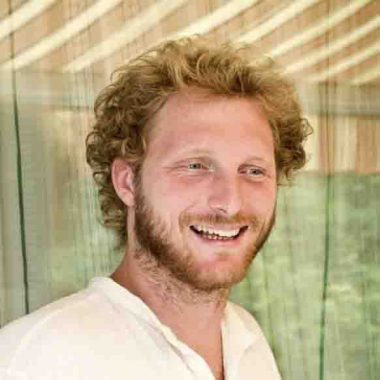
Truth is what we search for and it's what we always wish to express, but the path gets rough, because truth seems to hide in the deepest swamps of lies. In this talk I will focus on methods in the creative process to approach truth - this rather subjective interpretation of reality - through the interplay of factual and fictional elements.
Gábor Arion Kudász (*1978, Budapest) is a Hungarian photographer and Associate Professor at Moholy-Nagy University of Art and Design. Arion often incorporates staged and artificial elements into a documentary approach to photography. His early landscape works concentrate on human interaction with the built and the natural environment. He examines the absurd and careless use of space as a natural resource. His recent works focus on the relationship between responsibility and ambition. He is currently researching life-choices of youth, supported by a scholarship from the Hungarian Academy of Arts. His achievements were recognized by the Robert Capa Grand Prize, and he is a committed self-publisher of photo books.
How do I understand an interdisciplinary art project, practice based artistic research at a higher education institution.
The lecture will be based on self-analysis of creative practice.
The lecture will take 1.5 hours (little workshop) and a further 0.5 hours of discussion.
Since 1985, Česlovas Lukenskas (*1959) has been actively involved in contemporary interdisciplinary art and performative projects, exhibitions. He organized various contemporary art events, and published many publications. He organized and has participated in more than a hundred different projects and exhibitions, which won various awards and scholarships at home and abroad. He is the founder and member of the legendary artist group Post–Ars. His works have been acquired by the Lithuanian National Museum, National Art Gallery, MKČ National Museum, MO (Museum of Modern Art) as well as private galleries and collectors in Lithuania, Germany, France, UK.
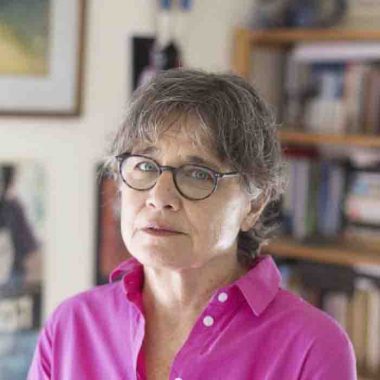
Personal documentation helps to find approaches to individual self–definition. This 5 day workshop will enable students to create a personal piece of work in a structured and process–oriented environment. While the nuclear family, the home, ethnicity, gender and religion may lay the foundations upon which the self is built, our lived experience shapes us through memories and upheavals that put–on and remove masks, change our face and teach us to speak in different voices. Building up inside of us; layer by layer. This workshop aims to expose episodes from our personal life that permeate and influence the subject–matter and language of each respective creator. Although the self–portrait can only hint at its meaning – based on fragments of memory and feelings that have left a mark – it is always an ‘essence’ of past, present and future. The workshop will set in motion a process of searching for personal / autobiographical motivations, to uncover a personal story best suited to describe a moment that crystallizes an idea. Through researching, producing raw materials and editing, students will complete a creative work. The course will support work in a range of media and processes.
A filmmaker and a lecturer. Her films include the acclaimed trilogy ‘My Terrorist’ (2002), ‘My Land Zion’ (2004) and ‘My Brother’ (2007), which were shown at international film festivals, broadcast worldwide by many television channels, purchased by many academic libraries and discussed at conferences internationally. Awarded the Art of Film prize at the Jerusalem Film Festival in 2005. ‘My Israel’ (2008) was commissioned by BBC and was based on the trilogy. ‘A Minor Shrine For Our Love’ (2014) was curated for Dani Karavan’s exhibition 50 years of the Negev Monument in the Negev Museum of Art. Since 2008, she has been teaching at Bezalel Academy of Arts and Design Jerusalem and over the last three years, has been developing ‘Who Killed Jessica?’ – a full–length animated film. For more information visit her website.
Please bring a notebook, pencil and eraser!
The Portfolio Reviews take 20 minutes with individual slots, rest of the group can observe.
Mariko Takeuchi is a photography critic, independent curator and Associate Professor at Kyoto University of Art and Design. Prior to this, she was a visiting researcher at the National Museum of Modern Art, Tokyo. Takeuchi was also guest curator for the ‘Spotlight on Japan’ exhibition at Paris Photo in 2008, and received a Fulbright Grant. Takeuchi is based in Kyoto, and has a M.A. in Arts from Waseda University, Tokyo. Her collection of essays ‘Silence and Image: Essays on Japanese Photographers’ was published in 2018.

This workshop gives participants the opportunity to transform existing garments into something new in a creative way or to use predetermined surfaces creatively for draping clothes. A strategic approach and consideration of upcycling and zero waste.
Ana Schmidt is a London–based Fashion Designer and Creative Pattern Cutter. She has been working in education since 2006, challenging contemporary clothing in cut and design. She studied Industrial Design with the focus on Fashion Design in Vivienne Westwood’s class at the Universität der Künste in Berlin. During this time, her work has been exhibited and showcased in various places in Germany, Italy and in collaboration with the Goethe Institute. After her graduation in 2003, she moved to London and started her career as Vivienne Westwood’s Personal Design Assistant being involved in the creation and development of collections of the different lines of the house such as women’s wear, men’s wear and bags. She now practises as freelance Designer and Creative Pattern Cutter, and has designed collections and developed fashion products involving creative and technical consulting for various companies such as Vivienne Westwood, Alexander McQueen, Peter Pilotto, Boudicca, McQ, David Koma, Markus Lupfer, Roland Mouret and Victoria Beckham. Always being interested in knowledge exchange, she has also taught as Associate Lecturer at the University of the Creative Arts in Epsom, Istituto Marangoni in London and London College of Fashion as well as conducting workshops in Draping at Universität der Künste in Berlin. Since 2015, she is part time Lecturer at London College of Fashion, University of the Arts London teaching Design and 3D Development.
Following Derrida’s remarks on Plato’s division, in the ‘Fable of Writing’ (Phaedros), between false memory (hypomnesis) and true memory (mneme), the talk aims at differentiating between two functions of memory: on the one hand, memory as an archive of data and facts, as done in digital media for example. On the other hand, memory of real, significant, often traumatic events, which shape our lives, and, as such, elude the archive while resurfacing in a spectral fashion.
Dr. Dror Pimentel teaches at the Bezalel Academy of Art and Design in Jerusalem. His publications include: ‘The Dream of Purity: Heidegger with Derrida’ (Magnes Press, 2009 [Hebrew]); ‘Aesthetics’ (Bialik Institute, 2014 [Hebrew]), ‘Heidegger With Derrida: Being Written’ (Palgrave Macmillan NY, 2019), and articles in: Iyyun: The Jerusalem Philosophical Quarterly; Heidegger Studies; British Journal of Aesthetics and Phenomenology; Performance Philosophy Journal, among others. He recently translated to Hebrew Heidegger’s Letter on ‘Humanism’ (Magnes Press, 2018).
Reading group before the talk: Please preparare: Plato ‘Fable of Writing’ and Derrida ‘Plato’s Pharmacy’. Pre–reading: Derrida’s ‘Plato’s Pharmacy’ (Deutsch: ‘Platons Pharmazie’ – in: Jacques Derrida: Dissemination, Wien, 1995, S. 69–192)
There are all kinds of structures and forms of power that are very much a part of our everyday lives, which we rarely notice, hidden in plain sight. This workshop asks you to look at the institution you find yourself in right now, the Fachhochschule Bielefeld, and create ‘photographs beyond photographs’. That is, how can you visualize the power of the very institution you study in, and use photography as a way to turn the invisible, visible?
Prior to photography, Donald Weber originally trained as an architect and worked with Rem Koolhaas in Rotterdam, The Netherlands. Weber’s work examines the hidden infrastructures of power, be it economic, political or social. His works result in publications. Interrogations is about post–Soviet authority in Ukraine and Russia, while War Sand explores D–Day as told through a grain of sand. He serves on the faculty of the Royal Academy of Art, The Hague (KABK), The Netherlands, and is a PhD candidate at Goldsmiths University, London.
IF you are happy
AND IF you know it
THEN clap your hands
ELSE
DO NOTHING
ENDIF
Pseudocode is programming without a computer and Karaoke is singing without the orchestra. During this assignment we will ask participants to deploy a self-invented routine on an everyday object they brought to the workshop and document its evolution. Please bring: Your bike OR a drilling machine OR a beautiful dress OR a chair OR a blender OR a camera OR a book OR something similar OR something completely different. The only requirements are that: You own the object AND disassembly of the object should be possible.
Catalogtree is a multidisciplinary design studio based in Arnhem (NL). It was founded in 2001 by Daniel Gross and Joris Maltha who met at Werkplaats Typografie. Nina Bender was part of studio from 2011 until 2020. The studio works continuously on commissioned and self initiated projects. Highly interested in self-organising systems they believe in 'Form Equals Behaviour'. Experimental tool-making, programming, typography and the visualization of quantitative data are part of their daily routine.
Recent endeavours include recycling pink plastic toys to create a way-finding system, turning a pocket calculator into a metal detector and designing a GIS route to the best spot for dropping a seventeen ton marble rock into the Mediterranean. Daniel Gross and Joris Maltha teach at ArtEZ Institute of the Arts in Arnhem (NL) and have taught and lectured widely. The work of Catalogtree is in the collection of the Cooper Hewitt, Smithsonian Museum of Design (NYC, USA), The Archive of Het Nieuwe Instituut (Rotterdam, NL) and the Museum of Design Zurich (Zurich, CH).
Please bring: laptop, camera, pen and paper.
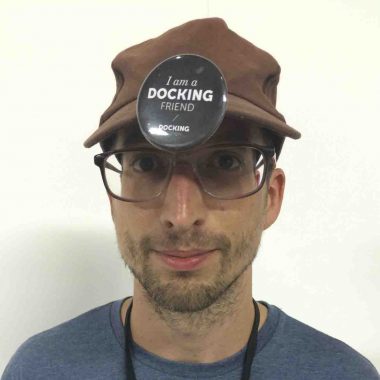
What if someone told you that the final exhibition of your graduation work will take place tomorrow? Let me be the person to tell you. In this workshop time will fly fast. There will be no space for doubt, nuance or reconsidering your thoughts. You will need to take decisions and get working! Luckily there is a pay–off: by the end of this workshop you will not only have a project statement, but you will also have a finished project! Sort of…
Thijs groot Wassink has worked for over a decade with Ruben Lundgren as artist duo WassinkLundgren. Their work shifts mundane, often unnoticeable, everyday occurrences into visually compelling and gently amusing observations of the world around us. They have published numerous publications, won awards and exhibited internationally (seriously, Google it). Thijs groot Wassink currently teaches at the Royal Academy in The Hague.
Please bring your laptop and images on your computer!
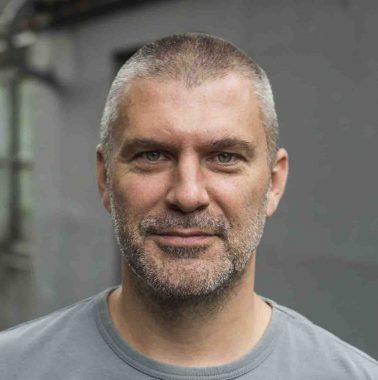
Lard Buurman (*1969) studied photography at the Royal Academy in The Hague, where he graduated in 1997. After his studies, he started to work as an artist and free–lance photographer. He made series and portraits for various magazines in the Netherlands, photographing projects that deal with public space and urban development. This gave him the opportunity to develop his visual research and explore his own style, which is based on the use of digital techniques in the context of documentary practice. His work was widely shown in the Netherlands and abroad (Goethe Institut/Johannesburg, Architekturmuseum Pinakothek/Munich, LagosPhoto/Nigeria). In April 2014, the book ‘Africa Junctions; Capturing the City’ was published by Hatje Cantz, Germany.
Lard Buurman will start his workshop with a lecture about his visual urban research of the African city in relation to street photography and the decisive moment. After this introduction, the group will start their own visual research of Bielefeld. We will forget the stereotypes of Bielefeld and ask ourselves: ‘What makes Bielefeld a generic city?’ The workshop will focus on people and their relation to the built environment. We will do this by the medium of street photography. This means that the daily street life is a starting point to represent this city as if it is any other German city. In three days, we will capture the Generic City of Bielefeld and perhaps add some evidence to the myth of the Bielefeld conspiracy.
Chinese characters originate from pictograms and ideograms, and many remain in their original form today. In this workshop, you will research these characters, trying to construct and compose characters with found objects, materials, imagery, footage, etc., using photography, collage, and digital composition. Obviously, the choice of materials should to some degree reflect the meaning of the respective character. Together you will then design a booklet using the outcomes from the workshop.
Du Qin, graphic designer and Assistant Professor at College of Design and Innovation at Tongji University in Shanghai. He completed his PhD on the foundations of Chinese typography at Central Academy of Fine Arts in Beijing in 2014. His teaching, research and practical work at Tongji University are centred around his expertise in typography, based on an interest in how old crafts and fundamental design language evolved in digital systems.
Please bring: laptop and camera.
Starting from a talk focusing on the theory of fashion practice in the expanded field to practical experimentation, this workshop promotes the exploration of notions of memory and fashion: A practical laboratory of interdisciplinary nature that engages with the development of processes of experimental composition of garments. Introduction to innovative materials to the fashion discipline, with the use of materials such as latex and plaster in the production of experimental clothing. Through the use of the age–old tradition of plaster moulds and the use of natural latex reproducing ‘found items’ from their original form into a memory – as a disruptive voice regarding productivity and functionality in design methods.
Lara Torres is a Senior Lecturer at the Fashion and Textiles Department since 2016 and a Course Leader for the MA Fashion and Textiles at the University of Portsmouth. She holds a doctorate from London College of Fashion, University of Arts London, with the thesis ‘Towards a practice of unmaking: the essay film as critical discourse for fashion in the expanded field’. Lara’s research sits at the intersection of fashion, fine arts and film practice and explores notions of an expanded field of fashion. Her fashion practice has been featured in several international exhibitions.
The seminar introduces key themes within the study of clothes in film in order to introduce you to a theoretical and critical framework of the field. The aim is to explore how clothes are represented in film, and how fashion and costume design influence and distinguish each other. Particular attention will be given to the analysis of female visual representations that will be explored within the historical, political and social context in which they are produced.
Giulia Bonali holds a degree in Modern Literature from Florence University and a Masters Degree in History of Design from the Royal College of Art and the Victoria and Albert Museum in London. Since 2009, she has been involved in the planning and delivery of undergraduate contextual studies modules at the University for the Creative Arts (UCA) and the Liverpool John Moores University. More recently, she has started teaching fashion studies to undergraduates and postgraduates students at the Polimoda Fashion School in Florence, and at the Sapienza University of Rome, Italy.
Die Studierenden werden eingeladen, eine Kartografie ihrer Erfahrungen eines spezifischen Ortes (FH–Gebäude) herzustellen. Anhand von mehreren festgelegten Protokollen soll das Erlebnis von Raum/Räumlichkeit (im architektonischen, materiellen, körperlichen und sozialen Sinne) ausgelotet und visualisiert werden. Mit zeichnerischen Materialien, aber auch mit Foto und Video werden performative Mittel der Interaktionen mit dem Raum einzeln, zu zweit oder in Gruppen ausgearbeitet und die Resultate zu einer kollektiven Karte zusammengefügt.
Katrin Gattinger lebt als bildende Künstlerin in Frankreich und unterrichtet Freie Kunst und Kunstwissenschaften an der Universität Straßburg. In ihren medialen Arbeiten versucht sie Festlegungen wie Zwangsfiguren, Diskurse, Begrenzungen, Gewohnheiten zu hinterfragen. Ihre Kunstprojekte werden regelmäßig ausgestellt (Einzelausstellungen in Frankreich, Kanada und Belgien); sie ist Autorin verschiedener Veröffentlichungen über zeitgenössische Kunst, Mitglied des Labors ACCRA/Unistra und der Zeitschrift Tête–à–tête, Entretiens. Während ihres aktuellen Forschungssemester arbeitet sie an einer Publikation über ‘Die List in der Kunst’ und ist 2019 Artist in Residence am Europäischen Institut für Meeresforschung in Brest.
Please bring: Drawing Material, Camera, Videocamera or Smartphone
This workshop aims to introduce Indonesian Batik with traditional tools and way. Batik is listed as a UNESCO Intangible Cultural Heritage of Humanity since 2009. In Indonesia, the techniques, symbolism and culture surrounding hand–dyed cotton and silk garments known as Indonesian Batik permeate the lives of Indonesians from beginning to end: infants are carried in batik slings decorated with symbols designed to bring the child luck, and the dead are shrouded in funerary batik. Batik even plays the central role in certain rituals, such as the ceremonial casting of royal batik into a volcano. Batik is dyed by proud craftspeople who draw designs on fabric using dots and lines of hot wax, which resists vegetable and other dyes and therefore allows the artisan to colour selectively by soaking the cloth in one colour, removing the wax with boiling water and repeating the process if multiple colours are desired. At the end of the workshop, students will be able to create batik with a traditional pattern on scarfs and simple jewelry from coconut shell with batik on it.
Since 2016, Yulriawan Dafri is Head of Craft Department, Faculty of Visual Art at Indonesia Institute of the Arts, Yogyakarta.
As a 20th century poet writes: ‘The real is not enough; through its disguise / Tell us the truth which fills the mind with light / Because, without each other, all is night.’ During this workshop, we will deal with the difficulty of discovering and expressing any ‘truth’ through photography. We are going to question common consensus. Students will take photographs in a community they are familiar with, in which they are insiders. The group will experiment with finding visual and narrative tools to express things hidden, unspoken or simply gone unnoticed.
Gabor leads the creative teams across Saffron’s international locations with over 20 years’ experience driving bold design work across the world. Working closely alongside the founders of Saffron, Jacob Benbunan and Wally Olins, he helped build Saffron into a leading global brand consultancy today. He hails from Germany and calls Madrid home.Gabor enjoys working with a multicultural team on the challenges brands face today, creating compelling customer experiences at the interface of physical and digital. He has led Saffron’s creative work for YouTube, A1 Telekom Austria, HyperloopTT, Gulf Air, the City of Vienna and most recently Facebook Company including its rebrand to Meta, to name but a few. Fluent in German, English and Spanish, Gabor also teaches, speaks at design conferences and juries awards.
Please bring your portfolio for the first meeting, as well as cameras, computers and mobile phones.
Those of you who have always wanted to design a Serif or Sans Serif reading text font, but didn’t because:
You have no idea how and where to begin.
You think it is much too difficult and therefore you never tried.
You believe that only experts and Type Design nerds can design a good font.
You are afraid it will take months, maybe years to design a fairly meaningful text font.
You think you need to learn a highly sophisticated Type Design software.
You are a font lover.
You are still fucking motivated to learn this Type Design shit.
Well, don't be intimidated anymore!
In this 3 day workshop, you will learn to create your first editable text font. You will start with your own design of your Type Face, through the digital craftsmanship of glyphs in Adobe Illustrator, and finally make the font production of your first editable OFT font.
Antonino Benincasa graduated in Communication Design in 1993, before he opened his own design office in Milan in 1996. From 1997 to 2005 he taught Visual Communication at the Politecnico di Milano, Faculty of Design. In 2000, he designed the Logo and Corporate Identity of the Olympic Winter Games in Turino 2006. In 2005, he was appointed as Professor and Dean at Free University of Bozen-Bolzano, Faculty of Design and Art. His research focus is in Typography, Type Design and Editorial Design. Since 2006 Antonino Benincasa lives and works in Bozen-Bolzano.
Please bring your laptop!

‘Multi–lingual’ or ‘multi–script’ typography is a hot topic these days. Type designers are not only creating superfamilies of typefaces, these typefaces also need to cover as many scripts as possible. At the same time, graphic designers are asked to find solutions for multi–lingual and multi–scriptural layout solutions that do not compromise the reading experience of the languages involved. While these are truly important tasks, they mainly focus on visually alining style and appearance of the respective languages. The beauty of knowing more than one language lies in the possibility of discovering unique characteristics of a language, even in one’s own mother tongue.
In this workshop, we will focus on ‘one characteristic’ of a language, visualize it by typographic means and introduce this concept into a small booklet of which each participating student will create one section.
This ‘characteristic’ can be anything you happen upon, for instance homophones, homonymes, odd spellings, loanwords, etc. While you are free to choose any language for this study, the descriptive or narrative texts (captions) need to be in English.
Mariko Takagi is a German-Japanese typographer, author, book designer and educator. She acts as an intermediary between Western and Japanese cultures – specifically between Latin letters and Japanese/Chinese characters. Mariko Takagi spent 6 years in Hong Kong (2010-16), where she worked as an Assistant Professor at the Academy of Visual Arts, Hong Kong Baptist University. This move from a Roman alphabet to a bilingual environment with Latin letters and Chinese characters gave her new inspirations and insights into culture, language and script. In 2016, she published the book ‘Kanji Graphy’, in which she explores the Japanese writing system, looking at visual and semantic expressiveness in typography. In April 2017, Takagi moved to Kyoto to continue working as an Associate Professor and Researcher at Doshisha Women’s College of Liberal Arts in Kyoto.
Please prepare: Select a topic or peculiar phenomenon on the basis of the ‘characteristics’ described above, either in German or in another language that you want to explore in a booklet to create a minimum of 8 double spreads each.